
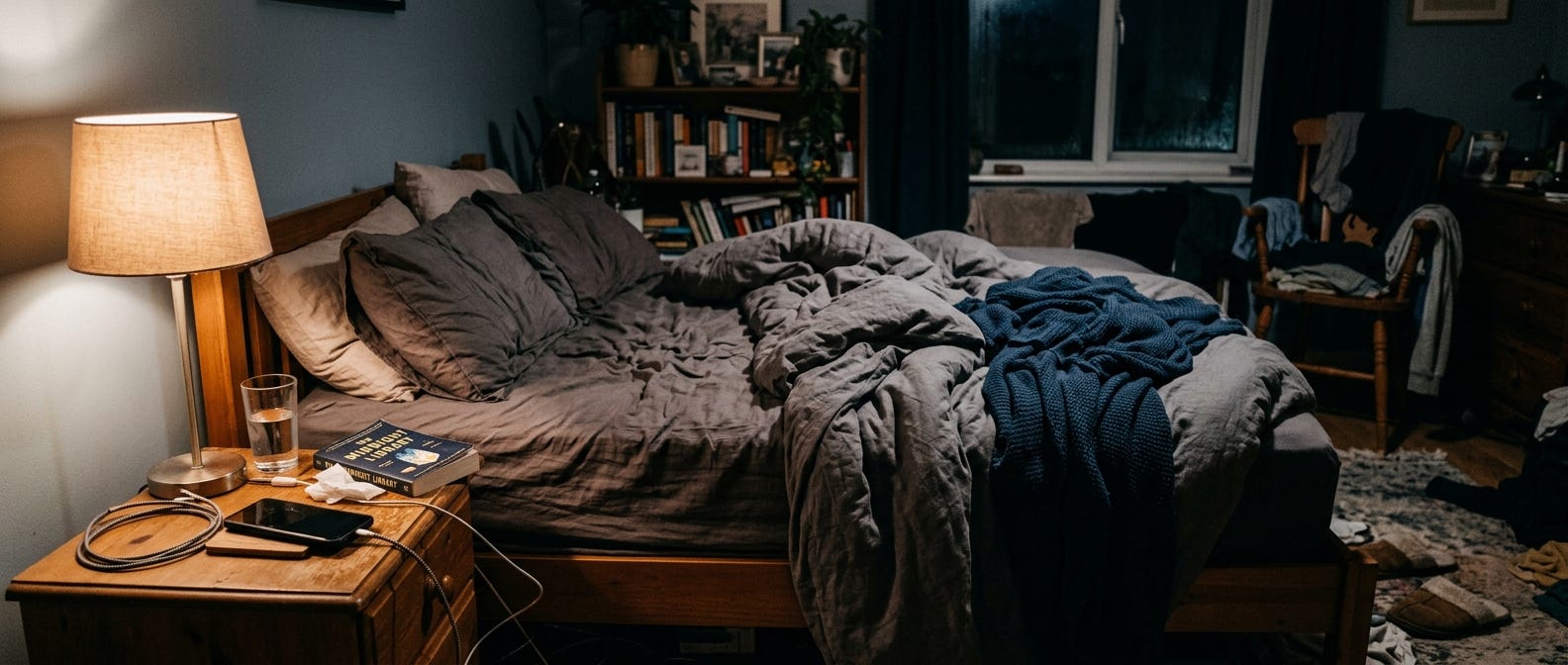
I used to think I could get by on six hours of sleep. Most of us do. We grab a coffee at 2 PM, push through the afternoon slump, and figure it’s just the baseline cost of being a busy adult. But a US Navy study wrecked that delusion for me, and it holds the real thesis for how we need to think about rest.
For decades, the Navy used an 18-hour watch cycle for submariners. This schedule meant sailors regularly got much less than the recommended 7 to 8 hours of rest in a 24-hour period. When researchers finally tested the cumulative effects of this schedule, they found that sleeping 6 hours a night for two weeks straight causes the exact same level of cognitive impairment as staying awake for two full days. Those restricted to 4 hours of sleep reached this same level of impairment much faster (showing severe declines by about day 6).
The most terrifying part of the study was the invisible decline of the sleep-deprived brain. The sailors actually felt fine, and their subjective feeling of sleepiness leveled off, but their objective reaction times plummeted to legally drunk levels. They genuinely believed they had adapted, even as their test scores collapsed. Like the sailors, I was lying to myself.
That’s the true danger of sleep deprivation, and it’s the core argument of this guide. Your judgment is the first casualty of exhaustion. As your cognitive bandwidth narrows, you lose the self-awareness required to realize how tired you actually are. It creates a brutal feedback loop: the less you sleep, the less able you are to make the rational decision to go to bed.
TikTok and Reddit are currently fixated on wringing an extra 2% of efficiency out of our sleep cycles with expensive tracking rings and complicated routines. But if you’re a normal person navigating work, friends, family, and the friction of modern life, you don’t need that noise. We just need to systematically reduce the friction around a few boring, highly effective basics.
Before we dive in: this is straightforward, but not easy. Sometimes life just gets in the way. If you have crying babies or toddlers waking up at 3 AM (or, ahem, a teen out with the car on a Saturday), you probably aren’t going to get enough sleep. There should be a different article on how to survive acute sleep deprivation (checklists, single-tasking, letting folks know what’s going on, and cutting yourself slack). But that’s not what this guide is for. This one is about fixing your baseline when you actually have the agency to do so.
Why sleep actually matters
We tend to treat sleep like passive downtime, but your brain’s actually doing the heavy lifting while you’re out. The American Academy of Sleep Medicine and the Sleep Research Society both say that adults need seven or more hours of sleep each night. Right now, nearly 36% of adults get six hours or less.
When we consistently sleep less than seven hours, things start to break. Short-term memory doesn’t get filed into long-term storage. Your glymphatic system acts as your brain’s plumbing network, and it absolutely requires deep sleep to function. Cerebrospinal fluid physically washes through the brain while you sleep to clear out metabolic waste (specifically amyloid-beta proteins). Failing to get enough restorative rest ruins your sleep architecture, and that disruption is strongly linked to the buildup of these proteins and the development of Alzheimer’s disease.
Lack of sleep also disrupts your hunger hormones, leptin and ghrelin. This shift drives intense hunger and cravings, making you significantly more prone to weight gain, insulin resistance, and type 2 diabetes. Combined with weakened immunity and cardiovascular stress, you can’t just power through these realities. We can, however, fix the underlying habits.
The ordered steps
Ignore the expensive gadgets and tackle these foundational steps. The first few are the absolute backbone of good sleep, while the latter ones are more conditional depending on your lifestyle. They’re ranked roughly by how much ROI you get for your effort.
1. Anchor your wake-up time and ignore the sleep bank
Stabilize your biological clock before you worry about anything else. Waking up at the exact same time every day, including weekends, is the single highest-yield habit for better rest. We have to abandon the myth of the sleep bank. You can’t accrue a sleep debt during the workweek and pay it off by binge-sleeping on Saturday. Studies show that weekend catch-up sleep causes metabolic dysregulation and social jet lag, giving your body a hangover every single Monday.
A 2024 study in the journal Sleep actually found that sleep regularity predicts mortality risk better than total sleep duration. Waking up at the same time keeps your brain’s master clock perfectly in sync, ensuring your evening melatonin release happens predictably. Of course, there’s some flexibility. Sleeping in by a half hour on a weekend is fine and won’t derail your rhythm.
2. Seek morning light
Your brain needs bright light to know the day has started. Getting 10 to 15 minutes of outdoor sunlight within an hour of waking up sends a massive biological signal to your brain. Indoor lighting usually isn’t bright enough to fully trigger this mechanism on its own. If you wake up before sunrise, turn on as many bright overhead lights as possible to start the wake-up process, and then get natural sunlight later when the sun is up.
If wrangling kids prevents you from stepping outside immediately, just get the light as soon as you realistically can. Any morning sunlight is vastly better than none. Your commute can be highly effective, as the natural light you receive while driving to work is often enough to trigger these biological signals. When bright natural light hits specialized cells in your eyes, it sends a direct signal to immediately halt melatonin production and start a countdown timer for when you’ll feel tired that evening.
3. Respect the caffeine half-life
I quit caffeine a few years ago. I did it mostly so I wouldn’t have to manage the chemical clock in my head, but the self-righteousness is nice, too. If you still drink coffee, you need to respect its caffeine half-life (roughly 6 hours).
If you drink a large coffee at 3 PM to survive a meeting, half of that caffeine is still actively circulating in your brain at 9 PM. A chemical called adenosine builds up in your brain throughout the day to create sleep pressure. Caffeine physically blocks the receptors that detect this pressure, hiding your exhaustion from your own brain. Try to set a strict caffeine cutoff time of 12 PM or 1 PM to ensure the drug clears your system before bed.
You might know someone who drinks an espresso after dinner and falls right asleep. But passing out isn’t the same thing as getting restorative rest. A landmark meta-analysis in the Journal of Clinical Sleep Medicine showed that consuming caffeine even six hours before bed disrupts objective sleep architecture. When monitored in a lab, even people who claim to be immune to caffeine and can fall asleep still show degraded sleep quality, reduced deep sleep, and frequent micro-awakenings.
4. Eliminate the alcohol trap
Alcohol’s the most misunderstood sleep aid in the world. A glass of wine might act as a sedative and help you conk out faster, but sedation isn’t quality sleep.
Alcohol initially acts as a central nervous system depressant, but its metabolism later in the night triggers a sympathetic nervous system arousal. This rebound effect suppresses highly restorative REM sleep early in the night and drives fragmented, low-quality rest in the second half (why you might wake up with a racing heart).
Social drinking is a very real part of adult life. If you choose to drink occasionally, lessen the blow to your sleep architecture by drinking smarter. Opt for a happy hour instead of a late nightcap, and aim to stop drinking at least 3 to 4 hours before your head hits the pillow. Drink a full glass of water for every alcoholic beverage and eat a solid meal to slow the absorption of alcohol into your bloodstream. Expect an elevated resting heart rate and poor sleep quality, accept it as the cost of a fun night out, and get back on your regular schedule the next day.
5. Control your environment and your stimuli
Remember that feedback loop of sleep deprivation? Your judgment degrades first as you get tired. Staying up late to watch another episode is usually an issue of competing goals and environmental friction, combined with that impaired judgment. Revenge bedtime procrastination (like bingeing Netflix when you know it’s time for bed) is a desperate bid to reclaim a sliver of your day when you lack the cognitive bandwidth to make a better choice. Make the right choice the default choice by moving your phone charger into the bathroom and buying a cheap alarm clock.
You also have to protect your brain’s association with the bed itself. The human brain is an associative machine. If you regularly answer work emails, watch television, or scroll through social media while lying under the covers, you train your nervous system to associate your mattress with alertness and stress. Use your bed exclusively for sleep and intimacy. If you want to read or watch a movie before bed, do it on the couch.
If you can’t fall asleep within 20 minutes, get out of bed and do a quiet activity in dim light until you feel sleepy. Staying in bed while frustrated teaches your nervous system to associate the mattress with anxiety. Break that friction by resetting in another room.
6. Cool and darken your shared cave
Aim for a bedroom temperature between 60 and 67 degrees. Your body must drop its core temperature by one to two degrees Fahrenheit to initiate and maintain sleep. If the ambient room temperature is too warm, your brain will struggle to cross the threshold into deep sleep. Combine this cooling with absolute darkness. Even small amounts of ambient light from streetlamps or electronics penetrate your eyelids and suppress pineal melatonin production. Blackout curtains or a simple eye mask are incredibly high-yield investments.
Clinical sleep guidelines often assume we sleep in isolated vacuum chambers. The reality is that most of us sleep in shared, messy ecosystems. You might know a cool room is best, but you still have to negotiate the thermostat with a partner who runs cold. Good sleep hygiene requires pragmatic compromises. Maybe suggest changes as temporary experiments rather than absolute rules. Agree to try a cooler thermostat setting for just two weeks to see how it impacts energy levels. If your partner runs cold, heat the person, not the room. Invest in separate blankets with different warmth levels rather than fighting over the duvet (my wife and I did this last year, and it’s been life-changing).
7. Time your meals and exercise
Late-night digestion competes with your body’s attempt to lower its core temperature and rest. Try to avoid heavy meals within three hours of your target bedtime. But going to bed hungry can also disrupt sleep by causing your blood sugar to drop, triggering the release of stress hormones like cortisol to wake you up. If you’re genuinely hungry before bed, opt for a small, easily digested snack rather than suffering through the hunger.
Aim to finish strenuous exercise at least two hours before you plan to sleep. A major meta-analysis in Sports Medicine found that evening exercise is generally beneficial for sleep, with one major exception. Vigorous, heart-pumping workouts completed within an hour of bedtime significantly delay sleep onset and reduce total sleep time because they heavily elevate cortisol, heart rate, and core body temperature.
8. Optimize the mattress within reason
The right environment’s crucial, but don’t fall into the trap of thinking a luxury mattress will cure your sleep problems. Most studies suggest we should use a medium-firm mattress to alleviate back pain, but your preferences may differ, and spending lots of money is unlikely to produce measurably better sleep. Treat finding the right mattress as another experiment. Take advantage of generous trial periods and return policies offered by many companies to test out different options. Get something comfortable and supportive that isolates motion if you share a bed, and then focus your effort on behavioral habits.
The noise: supplements and biohacking
Once you master the basics, you might be tempted by the world of sleep supplements and trends. These interventions usually offer marginal gains at best for people who are already doing everything right. Some are easy and safe enough to try, while others are potentially harmful and should be avoided entirely.
Melatonin is a clock, not a hammer
Melatonin is the most widely misused sleep supplement on the market. People treat it like a sleeping pill because large doses right before bed act as a mild sedative. Biologically, melatonin is a darkness signal that tells your brain it’s time to begin the wind-down process. Taking massive doses is counterproductive and usually leaves you groggy the next day. Clinical data show melatonin is most effective in micro-doses (0.3mg to 0.5mg, which is way below most of what is sold but is within the range of what your body produces naturally) taken several hours before your target bedtime to gently shift your circadian clock.
Blue-light glasses and night modes
Consumer blue-light blocking glasses are incredibly popular, but the clinical data don’t strongly support their use. Standard consumer lenses don’t actually filter out enough light to prevent the suppression of melatonin. Software features like night mode or warm color shifts on your phone and computer are also mostly a matter of personal preference. The raw brightness of the screen and the cognitive stimulation of whatever you’re looking at matter far more than the color tint. Turn down the overall brightness of your screens or, ideally, put devices away entirely.
Over-the-counter aids and cannabis
People frequently turn to over-the-counter antihistamines like Benadryl or ZzzQuil when they struggle to sleep. Your body builds a rapid tolerance to them, rendering them ineffective within days. Long-term use of these anticholinergic drugs is also linked to an increased risk of dementia in older adults. Cannabis is often used to initiate sleep, but it actively disrupts your sleep architecture by suppressing REM sleep and often causes rebound insomnia when you try to stop using it.
Magnesium and other supplements
A massive industry has been built around supplements like Magnesium Threonate, Apigenin, and L-Theanine. While some mechanistic evidence suggests these compounds can promote relaxation, the clinical data for their effectiveness in treating actual sleep issues are relatively weak. The American Academy of Sleep Medicine states there’s insufficient clinical evidence to recommend supplements like magnesium for the treatment of chronic insomnia. (I take a low-dose generic magnesium pill before bed because it gives me incredibly vivid dreams - but not for sleep.)
The mouth taping trend
Mouth taping has become a popular social media trend, promising deeper sleep and reduced snoring by forcing nasal breathing. Nasal breathing is physiologically superior, but taping your mouth shut is a potentially dangerous band-aid for an undiagnosed problem. If you breathe through your mouth at night, it’s usually because your nasal airway is obstructed or because you suffer from obstructive sleep apnea. Taping your mouth doesn’t fix the obstruction; it just forces your body to work harder to get oxygen.
What about naps?
While napping is an incredible tool for cognitive performance if you follow a strict playbook (a NASA study found a 26-minute nap improved pilot alertness by 54%), naps are a double-edged sword.
Keep them under 30 minutes and finish them before 3 PM. A brief nap keeps you out of deep sleep, preventing that severe grogginess when you wake up. Keeping it early means you won’t burn off the valuable sleep pressure you need to fall asleep that night. Napping longer or later erodes your nighttime sleep drive and is linked to diabetes and metabolic dysregulation.
And while we’re here, you might have heard of polyphasic sleep (breaking your rest into multiple short chunks around the clock). Don’t worry about it. It’s an extreme optimization trend that you shouldn’t even consider.
Age-specific nuances
The biological rules of sleep change as we age. Teenagers aren’t just being lazy when they want to stay up until 1 AM and sleep until noon. Biology triggers a legitimate delay in the circadian phase during adolescence. Their bodies simply don’t release melatonin until much later in the evening than adults, making early school start times a severe biological mismatch.
Older adults frequently experience an advanced circadian phase, feeling tired very early in the evening and waking up before dawn. The timing shifts, but the biological requirement doesn’t. Older adults still need 7 to 8 hours of sleep for optimal health. Changes in brain architecture often make it much harder for them to consolidate that sleep, leading to frequent nighttime awakenings.
When to stop trying and see a doctor
Sometimes, good habits aren’t enough. If you’ve diligently reduced the friction in your routine for several weeks and you’re still chronically exhausted, it might be time to look for a medical issue. Good sleep hygiene can’t fix structural problems, and attempting to lifestyle-hack a clinical disorder is frustrating and dangerous. Consult a primary care physician or a specialist at a sleep clinic if you regularly experience certain warning signs.
Obstructive sleep apnea
Loud snoring, gasping for air, or waking up feeling like you’re choking are classic symptoms of Obstructive Sleep Apnea. This condition occurs when your airway physically collapses during sleep. If diagnosed, a CPAP machine physically keeps your airway open, immediately restoring oxygen levels and deep sleep. Talk to a doctor - if untreated, this is very dangerous.
Chronic insomnia
You likely need clinical support if you consistently can’t fall asleep or stay asleep despite having a good sleep environment and a strict schedule. Doctors usually prescribe Cognitive Behavioral Therapy for Insomnia (CBT-I) to address the underlying anxieties keeping you awake, as that’s been found to be successful in most people and much more effective than drugs.
Restless legs syndrome
An uncontrollable, uncomfortable urge to move your legs when you’re trying to rest in the evening is the hallmark of Restless Legs Syndrome. A doctor will likely check your iron levels and can prescribe supplements and/or medications - this is fixable.
Hypersomnia and narcolepsy
Severe daytime sleepiness that interferes with your life is a major red flag. If you find yourself falling asleep during normal, active situations (like driving, sitting in meetings, or talking with friends), your brain is experiencing a pathological level of sleep debt. Treatment is highly specialized and prescribed by a sleep specialist.
The truth about consumer sleep trackers
Wearable devices like the Apple Watch, Oura Ring, Garmin, and Fitbit have made tracking your rest incredibly accessible. But doctors rely on an electroencephalogram to directly measure electrical brain wave activity to accurately define sleep stages. Your smartwatch or tracking ring can’t read brain waves. These devices rely on secondary signals (primarily movement and heart rate variability) to estimate what your brain is doing.
Trackers often struggle with wakefulness detection because they rely heavily on movement. If you lie in bed awake but completely still, your device will likely assume you’re asleep. Consumer trackers often overestimate your total sleep time, creating a false sense of security about your rest. The detailed charts showing your light, deep, and REM sleep should be viewed as educated guesses rather than clinical facts - none of these trackers work universally well. Use them to observe broad, multi-week trends in your bedtime routine, but don’t obsess over a single night’s sleep score. If the numbers make you anxious, take them off.
The bottom line
We spend a lot of time obsessing over the perfect evening routine, our nighttime pills, the right mattress, and the exact temperature of our bedrooms. Those things matter; however, they’re entirely secondary to the real battle.
The biggest threat to your sleep isn’t a glowing screen or a late-afternoon cup of coffee. The biggest threat is the invisible decline of your own judgment. When you’re tired, your brain loses the capacity to realize it’s tired. It’s pernicious: you can’t decide to go to bed, which only makes you more exhausted the next day.
You don’t need more willpower to break that cycle. You need to build a system that makes the healthy choices automatic. Anchor your wake-up time, cut off your caffeine at noon, and put your phone charger in another room. Systematically eliminate the friction required to get into bed, and your biology will take care of the rest.